DC Fans vs Air-Con: Cut Electricity Bills in Singapore 2026
High-efficiency DC ceiling fans consume up to 70% less electricity than AC fans and create a wind-chill effect that makes ambient temperatures feel 2–4°C cooler.
In Singapore homes, HDB, BTO, or condo running a DC fan alongside air-con set 2–3°C higher delivers equivalent comfort at significantly lower electricity cost.
They work best as a complement to air-con, not a full replacement.
Table of Contents
- What makes a DC fan fundamentally different from AC fans
- Room-by-room guide to deploying DC fans strategically
- DC fan vs inverter air-con: honest comparison
- Common mistakes and how to fix them
- PRO-TIPs + FAQ

What Makes a DC Fan Fundamentally Different from AC Fans
DC (Direct Current) fans use a brushless motor powered by converted direct current, versus traditional AC (Alternating Current) fans that run directly off the mains supply.
In practical terms, this means:
- DC fans consume up to 70% less electricity than equivalent AC models
- They run whisper-quiet, critical in Singapore bedrooms and open-plan living areas
- Speed control is far more precise typically 6–9 speeds versus 3 on AC models
- They generate less motor heat, which matters in an already-warm climate
- Most quality DC fans are compatible with smart home systems and remote controls
That precision speed control is the key to reducing air-con reliance: you can dial the fan to exactly the airflow needed to feel comfortable, rather than toggling between "too slow" and "too strong."
Your Room-by-Room Guide to Strategic DC Fan Deployment
Living Room: Your Primary Air-Con Offset Zone
The living room is where strategic fan placement pays off most.
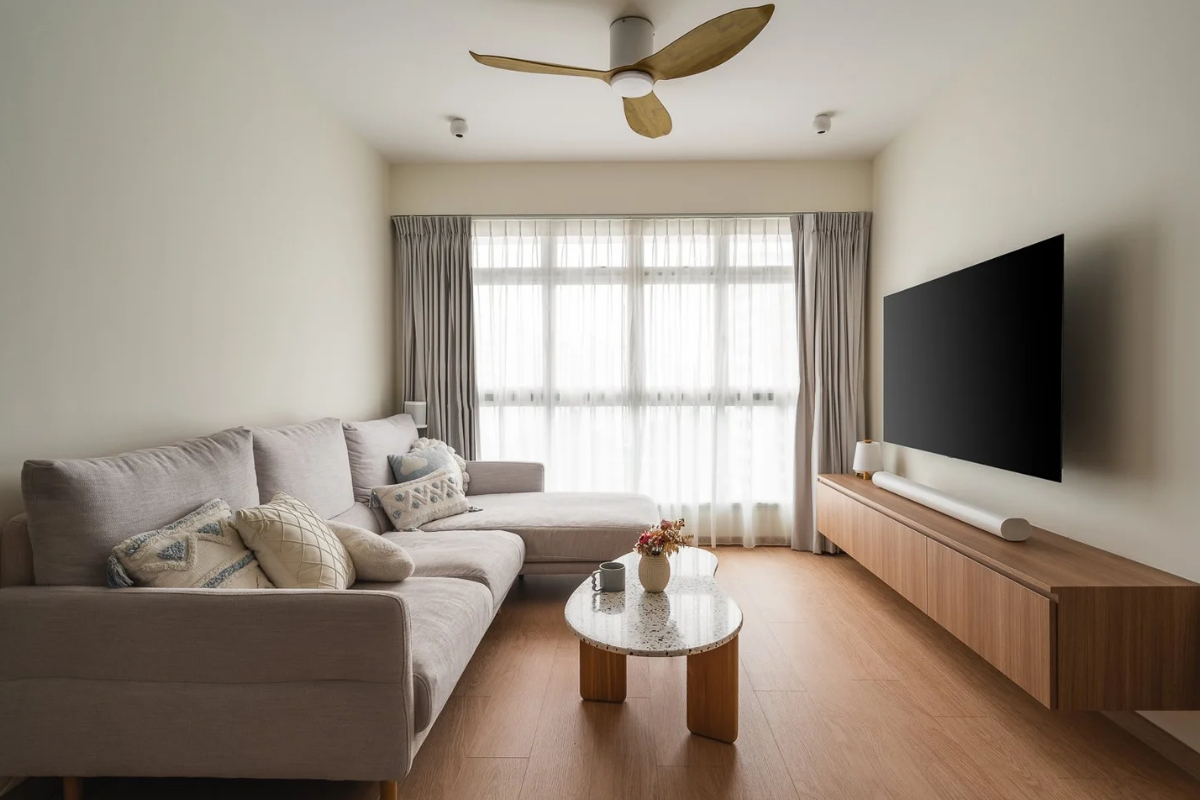
A well-sized DC ceiling fan matched to room size, typically 48–56 inches for standard HDB living areas creates enough air movement to raise the comfortable ambient temperature by approximately 2–4°C.
In practice: instead of setting the air-con to 22°C, many households find 25–26°C with a DC fan running on medium speed feels equivalent.
That delta alone significantly reduces compressor load and electricity draw.
Key consideration: Ceiling height matters.
- For standard HDB 2.6m ceilings, choose a fan with a low-profile or hugger mount.
- For condo units with higher ceilings, a downrod extension is needed your electrician can advise on safe installation at the DB box.
Bedroom: The Sleep Comfort Equation
Bedrooms are where DC fans deliver the most immediate lifestyle impact.
- Run the fan through the night at low speed (DC fans are near-silent at lower settings)
- Set air-con to 26–27°C rather than the common 23–24°C default
- The fan's wind-chill effect makes 26°C feel several degrees cooler on skin
This approach fan on, air-con temperature raised is one of the fastest ways to meaningfully cut electricity consumption without any reduction in sleep comfort.
Kitchen and Dining: Ventilation Over Cooling
Kitchens generate heat. Air-con in a kitchen fights a losing battle against cooking heat sources.
A DC ceiling fan or well-placed DC pedestal fan here removes hot air and improves ventilation more effectively than air-con alone.
Use the fan to exhaust cooking heat; reserve air-con for the dining area if needed, not the kitchen itself.
Home Office: Sustained Focus Without the Cold
Prolonged air-con exposure at low temperatures is a common complaint among work-from-home Singapore residents dry eyes, stiff necks, and inflated electricity bills.
A DC fan on medium speed, air-con set to 25–26°C, is a more sustainable and more comfortable combination for six-to-eight-hour working days.
DC Fan vs Inverter Air-Con: Honest Comparison
| DC Ceiling Fan | Inverter Air-Con | |
|---|---|---|
| Electricity use | ~15–35W | ~500–900W (varies by load) |
| Upfront cost | Lower | Higher |
| Cooling method | Wind-chill (perceived) | Actual temperature reduction |
| Effective above 30°C ambient | Limited | Yes |
| Night-time noise | Near-silent | Audible compressor hum |
| Installation complexity | Standard electrical point | Requires outdoor compressor unit |
Common Mistakes When Using DC Fans to Offset Air-Con
Mistake 1: Buying an undersized fan for the room
Fix: A fan too small for the space creates ineffective airflow. Match blade span to room dimensions, your supplier or electrician can advise.
Mistake 2: Running fan and air-con at the same temperature as before
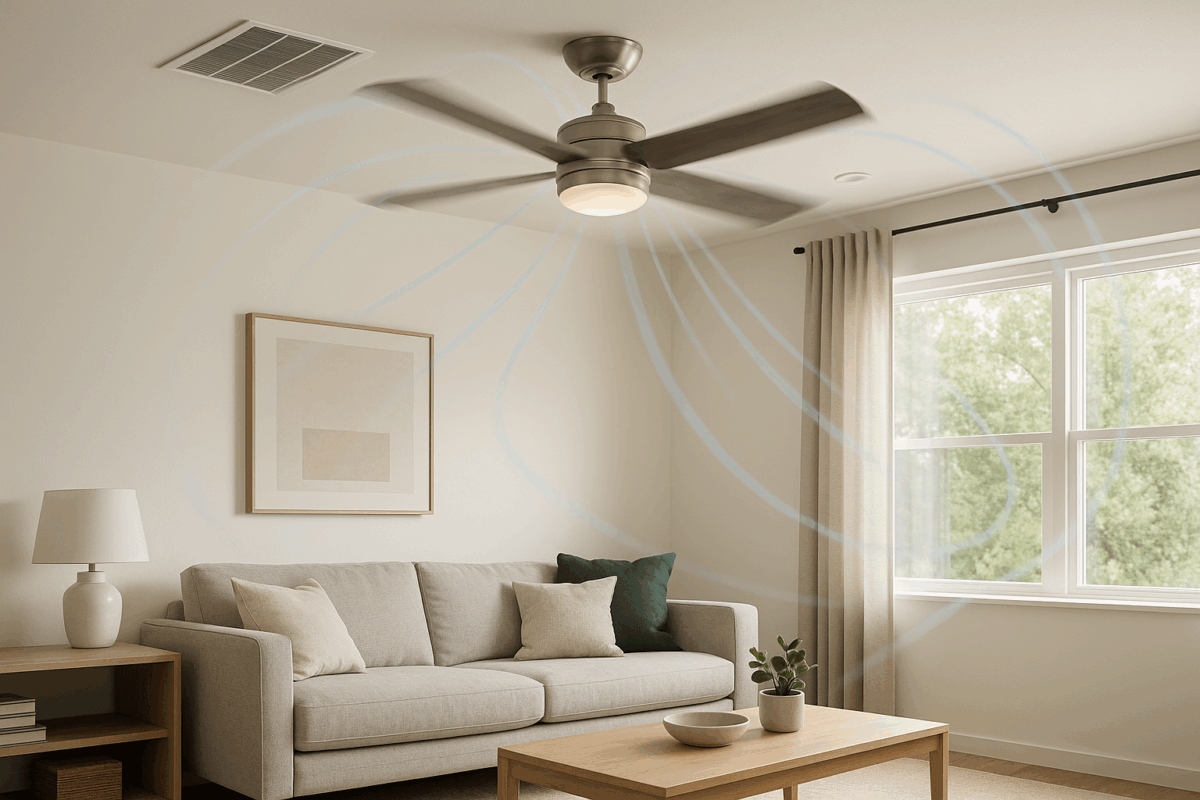
Fix: The fan only helps if you raise the air-con thermostat. Fan on, same temperature = higher electricity bill, not lower.
Mistake 3: Installing without checking the existing ceiling electrical point
Fix: In many HDB units, the ceiling point is on a shared lighting circuit. A electrician should confirm the point can safely support a fan's motor load before installation.
Mistake 4: Ignoring fan direction settings
Fix: Most DC fans have a reverse/winter mode, counterclockwise for cooling downdraft in warm months.
Check the remote or switch; many homeowners never change this from factory default.
Mistake 5: Choosing a fan based on looks alone
Fix: Motor quality, blade pitch, and RPM range determine actual airflow. Prioritise verified airflow ratings (CMM or CFM) alongside aesthetics.
PRO-TIP:
Pair Your Fan with the Right Switch
-
DC fans use up to 70% less electricity than traditional AC ceiling fans
- Wind-chill effect allows air-con thermostat to be raised by 2–3°C comfortably
- Each 1°C thermostat increase cuts air-con energy use by roughly 8–10%
-
DC fans require DC-compatible switches, standard dimmers will damage the motor
- Best deployed as a complement to air-con, not a standalone replacement
FAQ
Q: Can a DC fan fully replace air-con in Singapore?
A: No. DC fans create perceived cooling via wind-chill but cannot reduce actual room temperature; they work best paired with air-con set 2–3°C higher.
Q: How much can I realistically save on my SP bill?
A: Raising your air-con thermostat by 2°C (enabled by fan use) can reduce air-con energy consumption by roughly 16–20%, though actual savings depend on usage hours and unit size.
Q: Do DC fans work in HDB flats with low ceilings?
A: Yes, choose a low-profile or hugger-mount model designed for 2.6m ceiling heights, widely available for standard HDB configurations.

Written by Goldberg Home SG