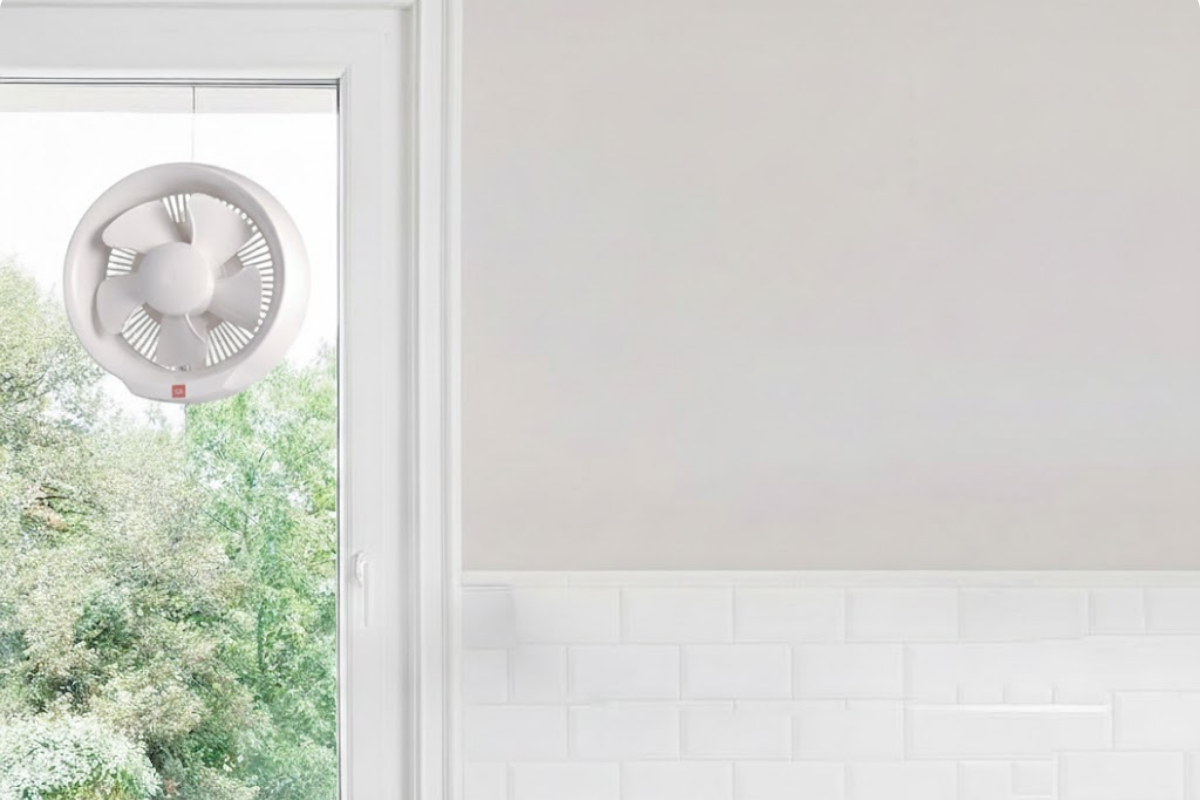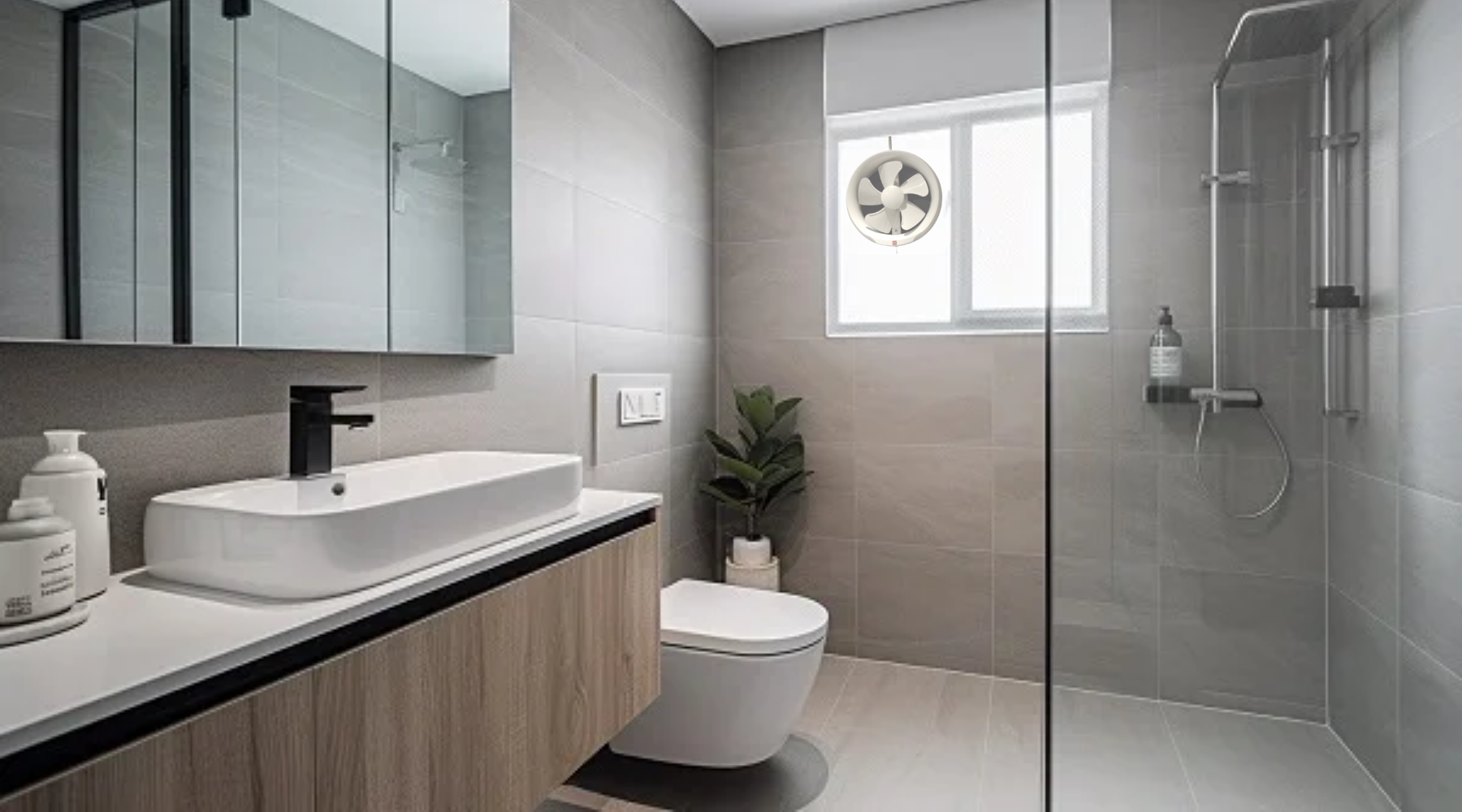
KDK WHPCT for HDB Corridor-Facing Bathrooms Explained
Your exhaust fan vents directly toward a shared corridor, a neighbour's door, or a common area.
A standard fan with low back-pressure resistance doesn't just underperform, it can allow odours, noise, and humid air to travel in directions you'd rather they didn't.
The KDK WHPCT is engineered for exactly this scenario, and this guide explains why.
Table of Contents
- The Specific Ventilation Problem With Corridor-Facing Bathrooms
- How Static Pressure Solves the Corridor-Facing Problem
-
WHPCT vs Standard Wall Fan: Side-by-Side Comparison
- Planning and Installation Checklist for Corridor-Facing Bathrooms
- FAQ

The Specific Ventilation Problem With Corridor-Facing Bathrooms
In a typical HDB flat layout, bathrooms positioned along the corridor-facing wall vent through a short, direct wall penetration to the external corridor or common area.
This creates three compounding problems:
Problem 1: Reverse airflow risk.
When corridor air pressure is higher than inside the bathroom, common when corridor windows or lift lobbies create cross-ventilation;
a standard low-resistance fan can allow air to push back into the bathroom rather than exhausting out.
Problem 2: Odour and humidity dispersal toward shared spaces.
Even when the fan operates correctly, exhausted air exits directly into a corridor used by neighbours.
A fan with insufficient static pressure pushes air weakly, it disperses poorly and lingers near the vent opening.
Problem 3: Noise transmission.
Thin wall penetrations in corridor-facing positions transmit both fan noise outward and corridor noise inward.
Fan selection and grille design both affect this.
How Static Pressure Solves the Corridor-Facing Problem
It helps to understand what actually happens inside a corridor-facing wall penetration during normal HDB conditions.
HDB corridors are open at both ends in most block configurations.
Wind-driven pressure differences across the building facade create variable corridor air pressure throughout the day.
During periods of higher corridor pressure, common in higher-floor units exposed to prevailing winds, a standard exhaust fan effectively works against a headwind.
The result isn't dramatic fan failure.
It's reduced airflow, incomplete moisture extraction, and residual odour the kind of persistent dampness that leads to mould on bathroom ceilings over time.
The WHPCT's motor and impeller are specified to maintain adequate airflow against this back-pressure. It doesn't eliminate the physics, it's engineered to work with them.
WHPCT vs Standard Wall Fan: Side-by-Side Comparison
| Criteria | KDK WHPCT | Standard Wall Exhaust Fan |
|---|---|---|
| Static pressure rating | High | Standard / low |
| Performance under back-pressure | Maintained | Degrades significantly |
| Corridor-facing suitability | Designed for it | Marginal in adverse conditions |
| Reverse airflow resistance | Better | Limited |
| Motor durability under load | Higher specification | Standard residential |
| Typical installation | HDB kitchens, demanding bathrooms | Secondary bathrooms, utility rooms |
| Relative cost | Moderate premium | Lower upfront |
Planning and Installation Checklist for Corridor-Facing Bathrooms
Work through this before your electrician's second-fix visit:
Site assessment:
- Confirm bathroom vent position faces corridor, not open external wall
- Note floor level, higher floors warrant stronger static pressure spec
- Check existing wall penetration diameter if replacing an old fan
- Confirm duct length from fan to external grille opening
Fan specification:
- Select WHPCT model sized to bathroom volume (calculate: length × width × height, target 10–15 air changes per hour)
- Confirm electrical supply and switch position with licensed electrician
- Check whether existing wiring supports the WHPCT motor draw
Installation details:
- Specify a backdraft damper (non-return flap) on the external grille, this is the single most effective physical barrier against reverse airflow
- Confirm external grille faces away from prevailing wind direction where possible
- Ensure wall penetration is sealed around the fan body to prevent air bypass
Post-installation:
- Test under normal corridor conditions, check for audible reverse airflow during windy periods
- Verify the backdraft damper closes fully when fan is switched off
FAQ
Q: Why does my HDB corridor-facing bathroom fan seem weaker than my neighbour's?
A: Floor level and corridor orientation affect back-pressure significantly; higher floors with wind-exposed corridors reduce standard fan performance, WHPCT is rated to handle this.
Q: Do I need HDB approval to install the WHPCT in an existing penetration?
A: Replacing a like-for-like fan in an existing wall opening generally doesn't require approval; new core-drilling through HDB walls requires a licensed contractor and may need prior consent.
Q: What is a backdraft damper and where do I get one in Singapore?
A: It's a non-return flap fitted to the external grille that closes when the fan is off, blocking reverse airflow; available through licensed electrical or ventilation suppliers and should be specified at point of fan purchase.
Q: Is the WHPCT noticeably louder than a standard KDK fan?
A: At comparable operating conditions the noise difference is minimal; the more relevant factor is that a correctly sized WHPCT running at normal speed is quieter in practice than an undersized standard fan straining under back-pressure.
Q: Can a timer switch be added to an existing WHPCT installation?
A: Yes, a timer switch can replace the existing wall switch on an already-installed fan; engage a licensed electrician for the swap.

Written by Goldberg Home SG