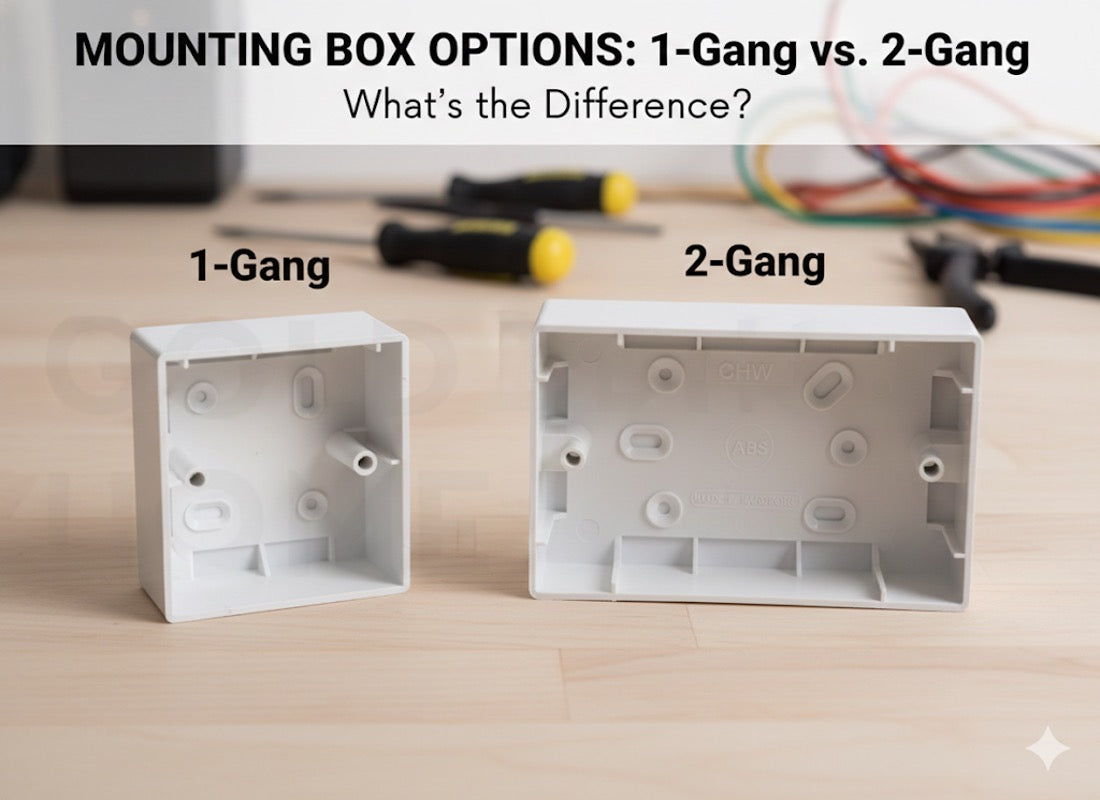
What is the difference between a 1-gang and 2-gang surface mounting box?
You're worried about under-specifying and ending up with octopus plugs everywhere.
Choose a 1-gang box if you only need to install one switch or single socket, and a 2-gang box if you want double sockets.

Table of Contents
- What "gang" means in mounting box terminology
- Size and capacity differences between 1-gang and 2-gang
- Common gang box sizing mistakes to avoid
- Understanding gang box compatibility with different devices
- FAQ
What "gang" means in mounting box terminology
"Gang" refers to the number of switch or socket positions a mounting box can hold. Think of it as "slots" or "spaces."
1-gang box = 1 slot = holds one switch OR single socket unit
2-gang box = 2 slots = holds double socket
The "gang" count determines the box width. Height is generally standard, but depth is not always the same.
Smart switches, dimmers, and USB sockets often require deeper boxes (47mm+). So depth should not be assumed identical across all gang boxes.
Size and capacity differences between 1-gang and 2-gang
1-gang mounting box:
Holds: 1 single switch, OR outlet socket, OR 1 combination USB-socket unit
Most common use: Individual bedroom light switches, single bathroom sockets, storeroom switches
2-gang mounting box:
Holds: Double sockets
Most common use: Living room lighting zones, kitchen countertop dual sockets, bedside lamp + phone charger
Common gang box sizing mistakes to avoid
Forgetting what “single” vs “double” socket really means:
In Singapore terminology, a 1-gang box holds a single socket unit. A 2-gang box holds a double socket unit.
Placing 2-gang boxes too low in kitchens: Kitchen counter sockets need height to avoid appliance blocking. But if your 2-gang box sits at standard floor height, the second socket is useless for countertop appliances.

Understanding gang box compatibility with different devices
Standard switches (rocker, toggle): Each switch needs one gang position.
Dimmer switches: Take one gang position just like standard switches.
Smart switches: Most fit standard 1-gang positions, but some bulky models need extra width. Verify smart switch dimensions before specifying gang box sizes, some require 2-gang boxes even for single switches.
Combination units (switch + socket): Special faceplates that hold one switch and single socket in a 2-gang box. Useful beside beds or in home offices where you need both controls.
USB charging sockets: Combination socket-USB units fit 1-gang boxes. Pure USB charging stations (4–6 ports) may need 2-gang boxes depending on model.
FAQ:
Q: What does "gang" mean in mounting boxes?
A: "Gang" means the number of switch/socket positions. 1-gang holds single socket, 2-gang holds double socket.
Q: Should I use 2-gang boxes everywhere?
A: No. Use 2-gang strategically in living room, kitchen, beside beds, and study. Use 1-gang in bedrooms, bathrooms, and utility areas.
Q: Do bedrooms need 2-gang boxes?
A: Bedside walls benefit from 2-gang (lamp + charger). Bedroom door light switches usually need only 1-gang unless separating fan and light controls.

Written by Goldberg Home SG