Cove Lighting Without False Ceiling: HDB-Friendly Options
Cove lighting looks incredible in renovation photos, but the moment your contractor mentions "false ceiling," the budget conversation takes a sharp turn.
The good news: that soft, indirect glow is achievable without hacking your slab or building a full plasterboard ceiling.
You just need to think about where the light hides, not where it hangs.
Table of Contents
- What cove lighting actually does (and why people want it)
- Why false ceilings aren't the only way
- Four methods to fake cove lighting without ceiling works
- Common mistakes and how to avoid them
- FAQ
.png)
What Cove Lighting Actually Does (and Why People Want It)
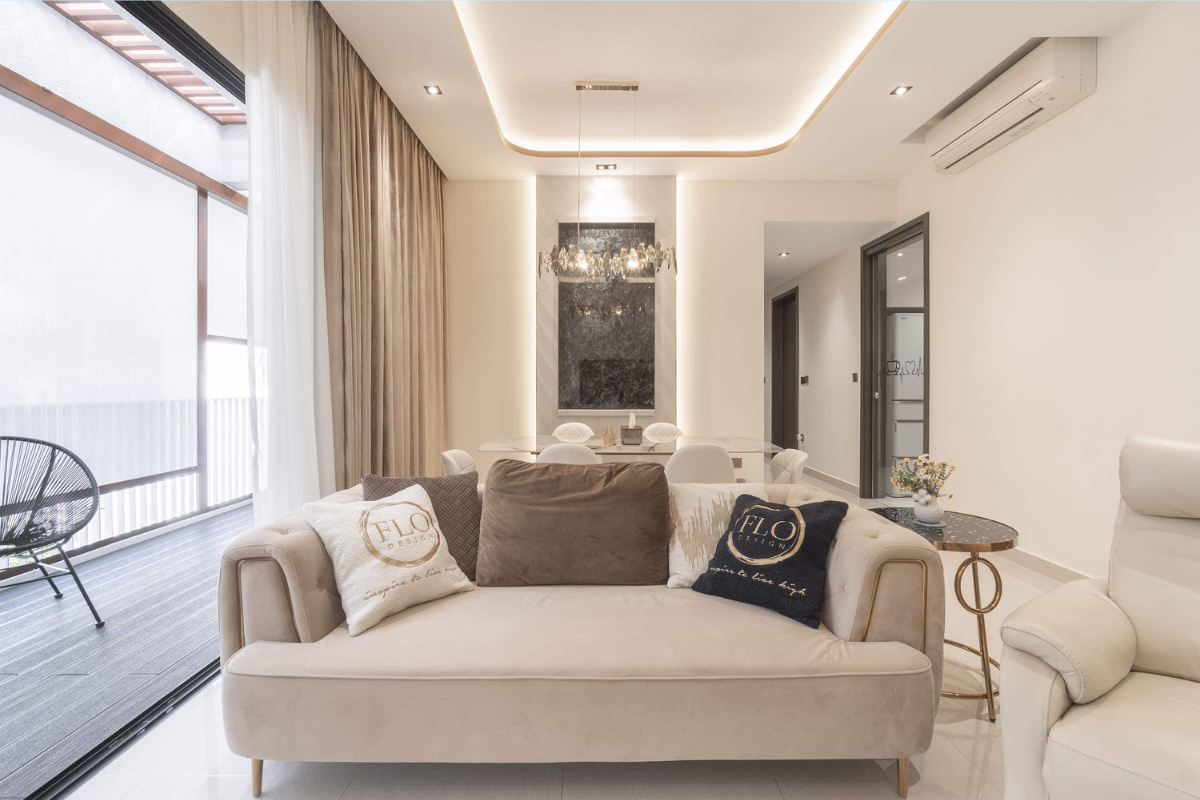
Cove lighting is indirect ambient light, light that bounces off a surface (usually a ceiling or wall) rather than shining directly at you.
The result is a warm, diffused glow with no visible source.
It makes a room feel larger, softer, and more considered.
That's why it's consistently one of the most requested lighting effects in Singapore HDB renovations.
Why a False Ceiling Isn't the Only Route
The traditional method hides LED strip lights inside a plasterboard cove built around the ceiling perimeter.
It works beautifully, but it costs money, eats ceiling height, and requires a electrician plus a carpenter working in sequence.
For HDB owners who want the effect without the works, the solution is to create a hidden ledge at a lower level on furniture, cabinetry, wall-mounted panels, or purpose-built light cornices.
The light source is still hidden. The glow still bounces. The ceiling stays untouched.
Four Methods to Achieve Cove Lighting Without Ceiling Works
1. TV feature wall with a recessed ledge
A carpentry feature wall behind your TV can incorporate an inward-facing ledge near the top.
LED strip lights tucked into this ledge wash light upward onto the ceiling, identical in effect to a ceiling cove, at a fraction of the cost.
2. Floating cabinetry with a light gap
Wall-mounted cabinets (in the living room, bedroom, or kitchen) installed with a deliberate gap from the ceiling allow LED strips along the top edge to project upward.
No ceiling works. Just smart cabinet placement.
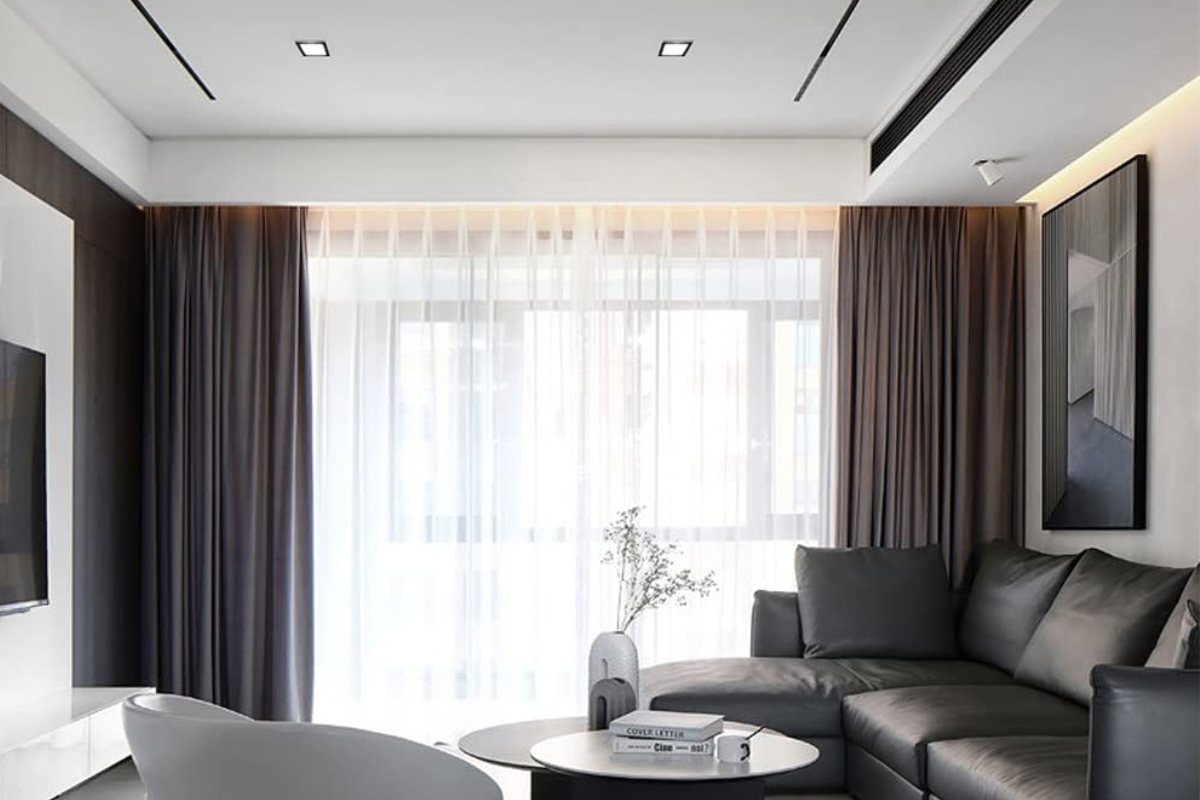
3. Curtain pelmet with integrated LED strip
A pelmet is a concealed box above your curtain track that hides the curtain header.
Build it with an inward-facing top channel and run a warm LED strip inside.
The light bounces off the ceiling above the window, a classic indirect lighting effect.
4. Freestanding or wall-mounted light cornices
Prefabricated light cornices (sometimes called cove brackets) are fixed to the wall near ceiling height.
They have a built-in channel for LED strips and project light upward without any structural ceiling modification.
Common Mistakes That Kill the Effect
Mistake 1: Placing the LED strip too close to the ceiling.
Fix: Maintain at least 150–200mm between the strip and the ceiling. Too close and you get a harsh bright band instead of a soft wash.
Mistake 2: Using cool white (5000K+) strips for cove lighting.
Fix: Cove lighting should be warm (2700K–3000K). Cool white reads as clinical and undermines the relaxed ambient effect entirely.
Mistake 3: Leaving the LED strip edge visible from seated height.
Fix: The strip must face inward or upward, fully hidden from normal sightlines. Test your sightlines by sitting on your sofa before fixing permanently.
FAQ
Q: Can I do cove lighting in an HDB without any carpentry?
A: Yes, curtain pelmets and prefabricated light cornices require minimal or no major carpentry works.
Q: What LED strip colour temperature is best for cove lighting?
A: Warm white at 3000K gives the softest, most flattering indirect glow.
Q: How far should the LED strip be from the ceiling?
A: At least 150–200mm. Too close creates a bright band; the right distance gives an even, diffused wash.
Q: Will cove lighting without a false ceiling look as good as the real thing?
A: Done well with quality strips and correct placement very close. The glow is the same; only the structure hiding it differs.

Written by Goldberg Home SG