Reno 101: Types of Lighting Options You Can Get
Lighting is super important in a home because of the ambience it can help to create and how it enhances the space 💡
It is important to have a rough idea of what kind of lighting you’d like for your home because that would determine if they’d need to build additional items (e.g., false ceiling) to accommodate it.
Ceiling height is important in HDB/BTO flats (~2.5–2.7 m), so not all lighting options are practical for all homes.

Here are 6 types of lighting options you can typically consider for your home:
Cove Lights
Cove lights are typically installed into a ledge along a false ceiling and the light fixtures are hidden. These are great for a modern/contemporary theme. However, you will need to build a partial false ceiling to have these installed, and ceiling height should be checked first to ensure the room doesn’t feel cramped.
Down Lights / Recessed Lights
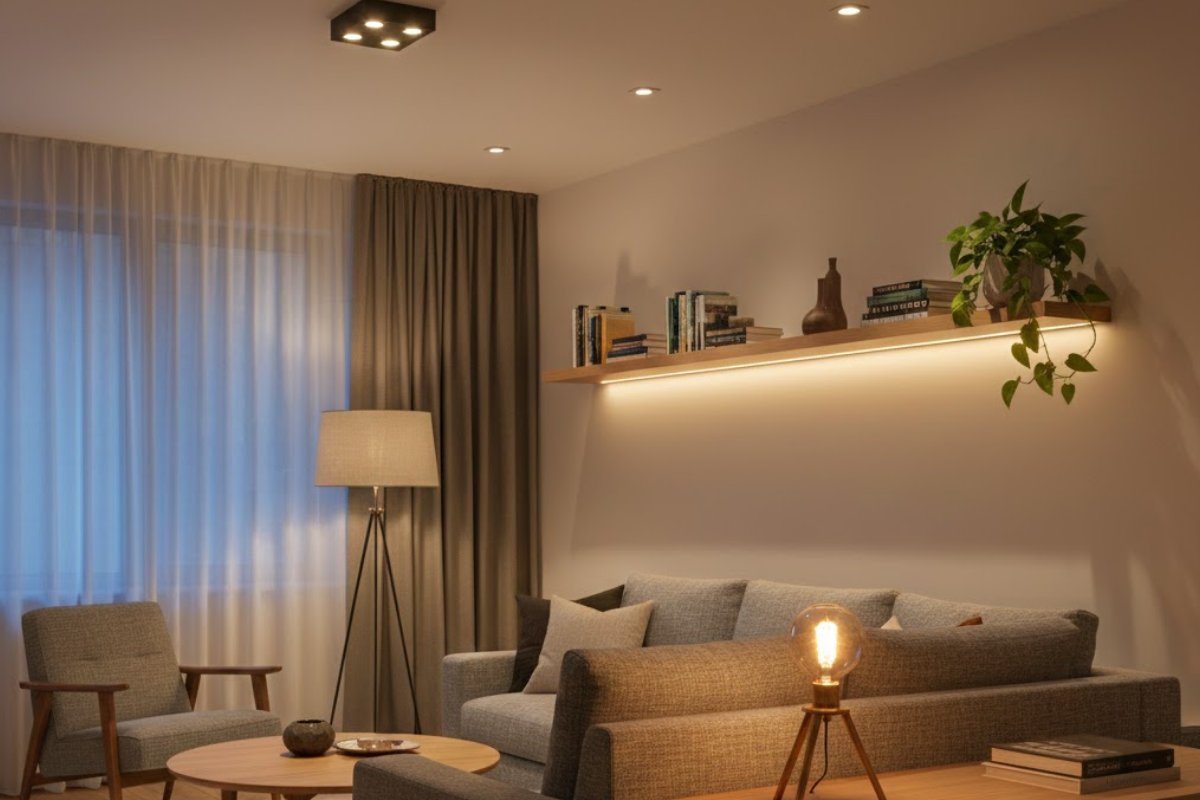
Downlights are fixed into openings in the ceiling and have a flat appearance. They are hidden within a false ceiling and can be arranged across the ceiling for even light distribution.
Typical LED downlights for Singapore homes are 400–600 lm each, spaced about 1–1.2 m apart, with warm white (3000–3500 K) for living/bedrooms and daylight white (5000–6500 K) for kitchens or bathrooms.
Installing recessed downlights may require a false ceiling.
Flush Mount Lights
Flush-mount lights are the most basic type, sitting directly against the ceiling with no gap.
These are easiest to maintain and ideal for rooms with low ceilings, such as typical HDB/BTO bedrooms (~2.5 m).
LED options are energy-efficient, commonly 5–15 W, and widely available in modern designs.
Semi-Flush Mount Lights
Semi-flush lights hang 10–20 cm below the ceiling, giving a small chandelier effect. They are generally easy to maintain but can collect dust between the gaps. For HDB flats, ensure your ceiling is at least 2.5 m to avoid low-hanging fixtures that interfere with movement.
Track Lights
Track lights are mounted along a track and can be pointed in multiple directions, often used to highlight art, shelves, or specific zones. They usually supplement general lighting, as they can create uneven light if used alone. Lumens vary from 300–500 lm per light, and placement is adjustable depending on room layout.
Pendant Lights
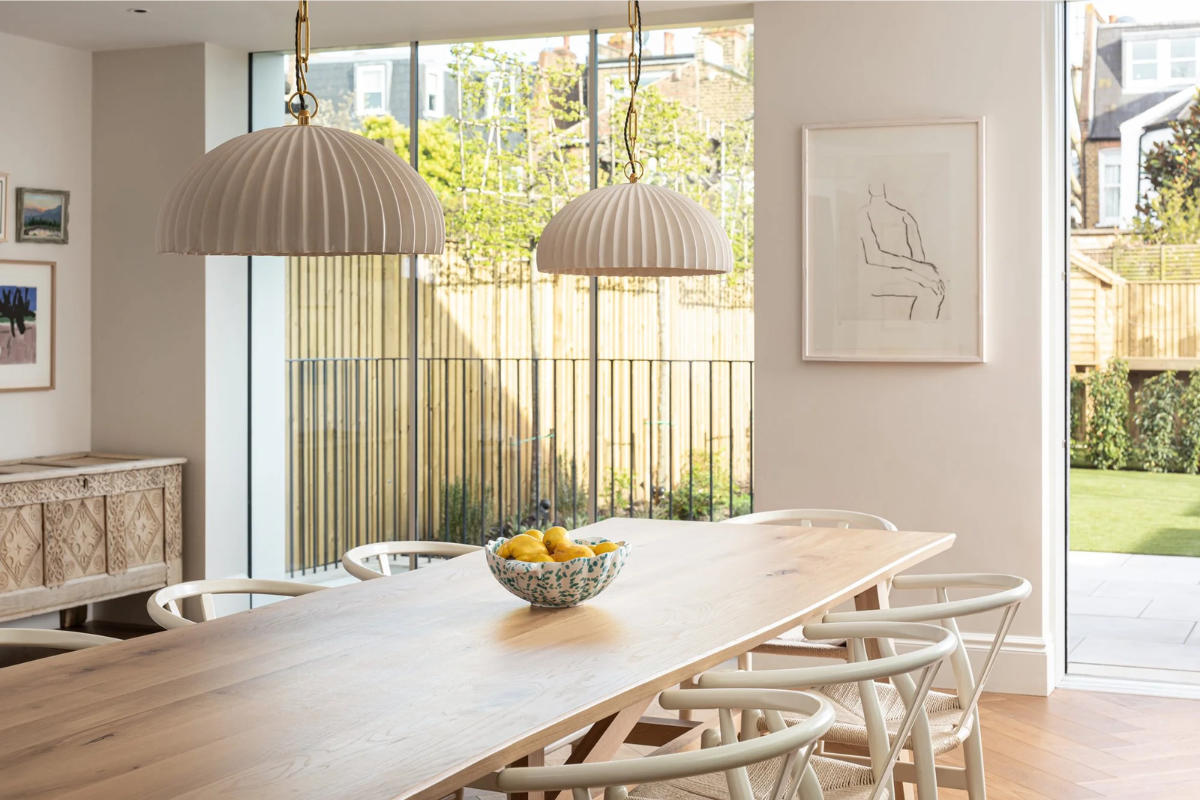
Pendant lights are highly aesthetic and can be installed as a single light, in pairs, or in triplets. They are best for dining tables or kitchen islands where ceilings are higher (≥2.7 m). Recommended drop height is 60–80 cm above the table. In HDB flats or smaller rooms with low ceilings, pendants might not be practical as main lighting.
|
Light Type |
Lumens |
Spacing / Placement |
CCT (Color Temp) |
Ceiling / Notes |
|
300–500 lm per metre |
Along false ceiling ledge |
2700–4000 K |
Requires partial false ceiling; check height to avoid cramped feel |
|
|
400–600 lm |
1–1.2 m apart |
3000–3500 K (living/bedroom), 5000–6500 K (kitchen/bath) |
Often requires false ceiling |
|
|
5–15 W (≈400–800 lm) |
Centered in room |
3000–5000 K |
Ideal for low ceilings (~2.5 m); easy maintenance |
|
|
5–15 W (≈400–800 lm) |
Centered or decorative |
3000–5000 K |
Ceiling ≥2.5 m recommended; slight chandelier effect |
|
|
300–500 lm per light |
Adjustable along track |
3000–4000 K |
Highlight zones/art; usually supplemental lighting |
|
|
400–800 lm per fixture |
60–80 cm above table/island |
2700–4000 K |
Best for ceilings ≥2.7 m; decorative, not ideal for low ceilings |
For our living room, master bedroom, and kitchen, we’re definitely going for downlights for a minimalistic vibe, while our normal bedrooms will use flush mount lights 💡

Written by Goldberg Home SG