What wattage is “recommended” for HDB rooms?
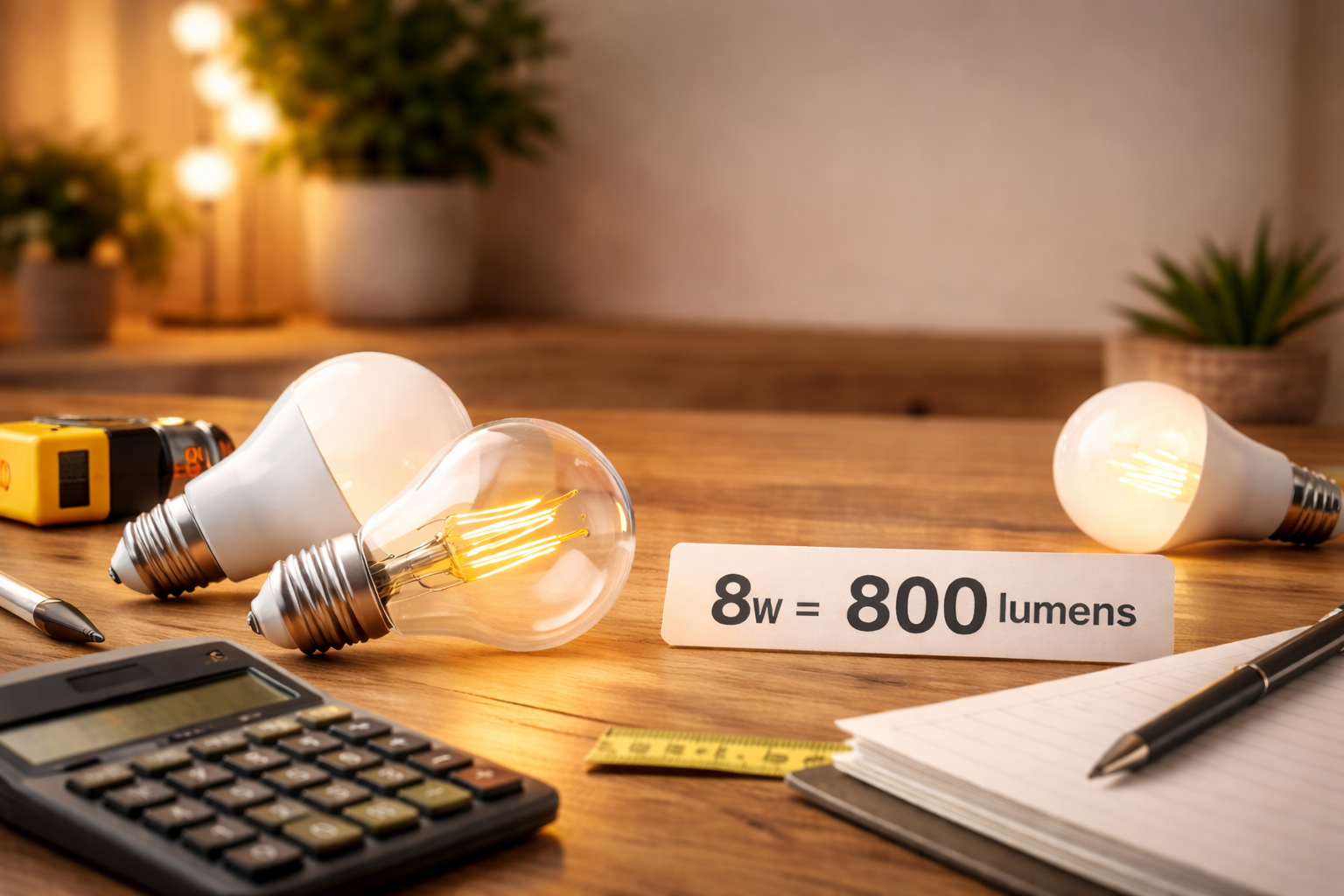
For modern LED lighting, wattage is only a rough guide, focus on lumens first, then check the wattage.
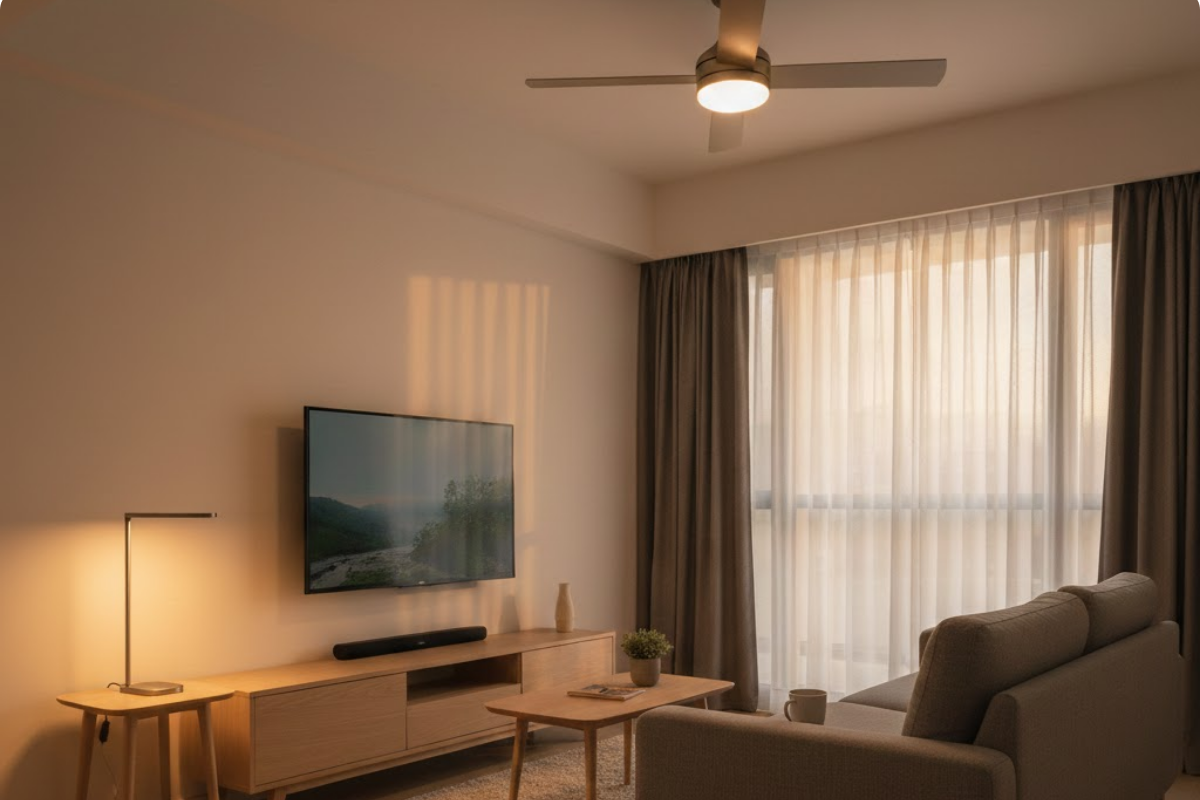
In most HDB homes, 5–7W LEDs are suitable for bedrooms, while 9–12W LEDs work well for living rooms, kitchens, and dining areas.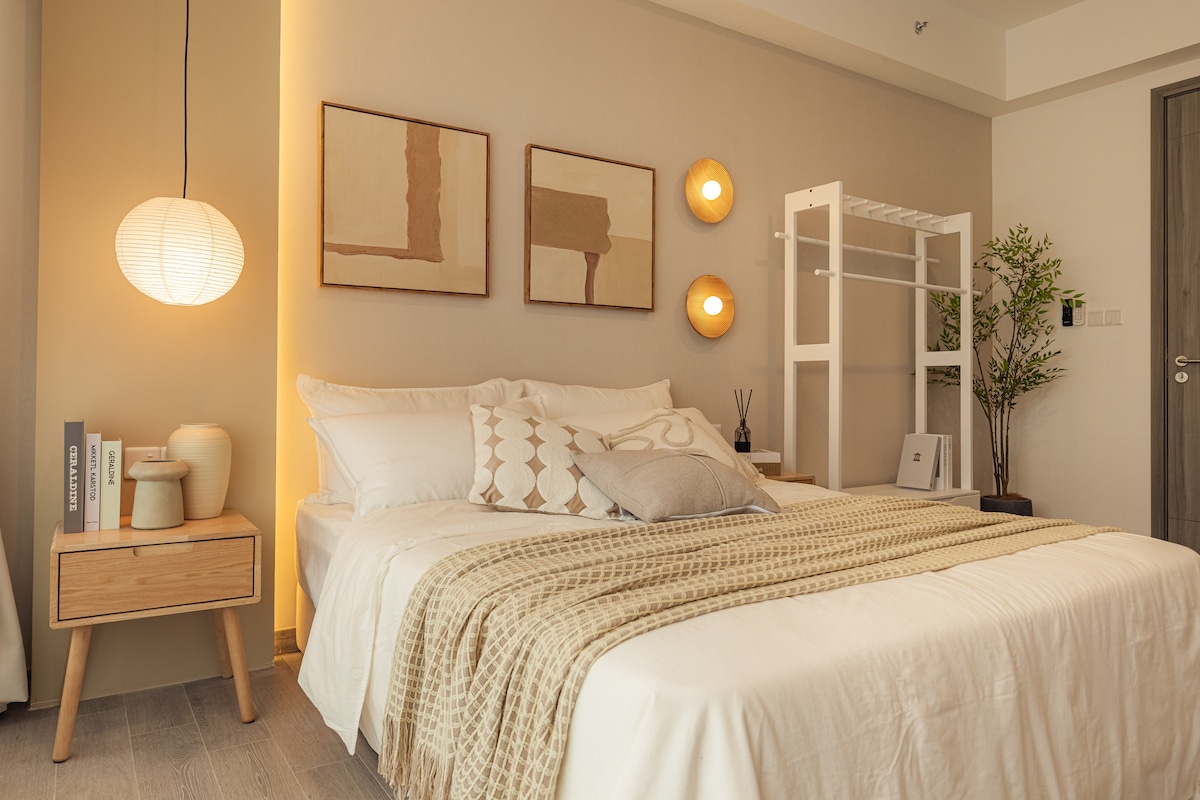
Table of Contents
- Why wattage alone doesn't tell the full story
- The number that actually matters: lumens
- Recommended wattage by room type
- High-wattage vs low-wattage LEDs: what's the real difference?
- FAQ
Why wattage alone doesn't tell the full story
Wattage measures energy consumption, not brightness.
A 10W LED and a 10W incandescent produce dramatically different amounts of light.
What you're really shopping for is lumens, the actual output of visible light.
Wattage is only useful as a shorthand once you know the lumen output of the specific fitting you're buying.
That said, wattage still matters for: energy costs, heat output, and fitting compatibility.
The number that actually matters: lumens
For practical planning, use this as your baseline:
- 400–500 lumens : soft accent or bedside light
- 600–800 lumens : standard bedroom or living room downlight
- 900–1,200 lumens : bright task or kitchen light
- 1,500+ lumens : high-output utility or commercial-grade
Most residential LED downlights in Singapore run 5W–12W, producing roughly 450–1,100 lumens depending on quality and design.
Example: A quality 7W LED downlight producing 700 lumens is sufficient for most HDB bedroom applications.
The same brightness once required a 60W incandescent bulb.
Recommended wattage by room type
| Room | Recommended Wattage (per fitting) | Lumens Target |
|---|---|---|
| Living room | 7W–10W | 600–900 lm |
| Master bedroom | 5W–7W | 450–650 lm |
| Common bedroom | 5W–7W | 450–650 lm |
| Kitchen | 9W–12W | 800–1,100 lm |
| Bathroom | 7W–9W | 600–800 lm |
| Study / home office | 9W–12W | 800–1,000 lm |
| Corridor / entryway | 5W–7W | 400–600 lm |
- These figures apply to standard HDB ceiling heights of 2.6m–2.8m.
- For higher ceilings, increase wattage or reduce spacing between fittings.
High-wattage vs low-wattage LEDs: what's the real difference?
| Factor | Low Wattage (5W–7W) | High Wattage (10W–15W) |
|---|---|---|
| Best for | Bedrooms, corridors, accents | Kitchens, studies, open-plan living |
| Energy cost | Lower | Higher |
| Heat output | Minimal | Slightly more, check fitting rating |
| Ambience | Softer, more residential | Brighter, more functional |
| Common mistake | Under-lighting task zones | Over-lighting relaxation spaces |
Who should choose what: Use low-wattage fittings as your default for living and sleeping zones, and reserve higher-wattage options for anywhere precision or task visibility matters.
Most HDB homes benefit from a mix of both, zoned by room function.
FAQ
Q: What wattage is best for an HDB bedroom?
A: 5W–7W per downlight fitting is sufficient for most HDB bedrooms at standard 2.6m–2.8m ceiling height.
Q: Is higher wattage always brighter?
A: Not necessarily, lumen output varies by brand and fitting quality; a premium 7W can outperform a budget 10W.
Q: Can I mix different wattages in the same room?
A:Yes, intentionally use higher wattage near task zones like wardrobes and lower wattage over relaxation areas.
Q: What wattage do I need for an HDB kitchen?
A: 9W–12W per ceiling downlight, supplemented by under-cabinet LED strips for countertop task lighting.

Written by Goldberg Home SG