KDK WUD vs WHPCT vs ALH: Singapore Ventilation Guide
In Singapore's year-round heat and humidity, the wrong ventilation choice means persistent condensation, lingering cooking odours, mould creep on bathroom ceilings, and a motor running harder than it should.
KDK's WUD, WHPCT, and ALH series each solve a different ventilation problem.
This guide helps you match the right series to your actual space before your electrician's second-fix visit.
Table of Contents
- Why Ventilation Decisions Matter More in Singapore
- WUD vs WHPCT vs ALH: Side-by-Side Comparison
- Room-by-Room Guide: Which Series Fits Where
- Common Mistakes When Choosing an Exhaust Fan Series
- FAQ
Why Ventilation Decisions Matter More in Singapore
Singapore's average relative humidity sits between 70–90%.
Bathrooms, kitchens, and utility rooms in HDB flats, many of which lack operable windows depend entirely on mechanical ventilation to manage moisture and air quality.
An undersized or wrong-type fan doesn't fail dramatically.
It just works harder, wears faster, and leaves your space feeling perpetually damp.
WUD vs WHPCT vs ALH: Side-by-Side Comparison

Room-by-Room Guide: Which Series Fits Where
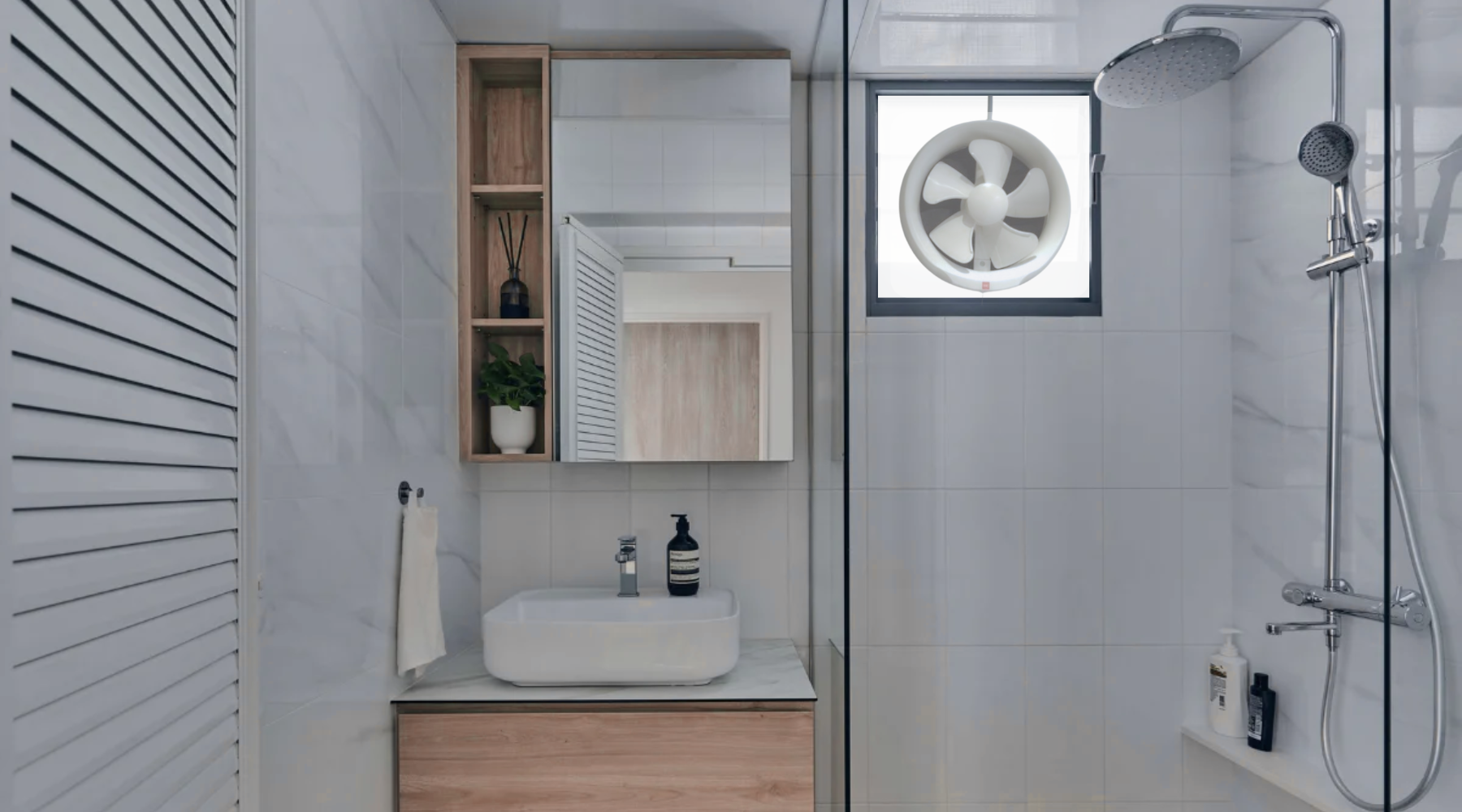
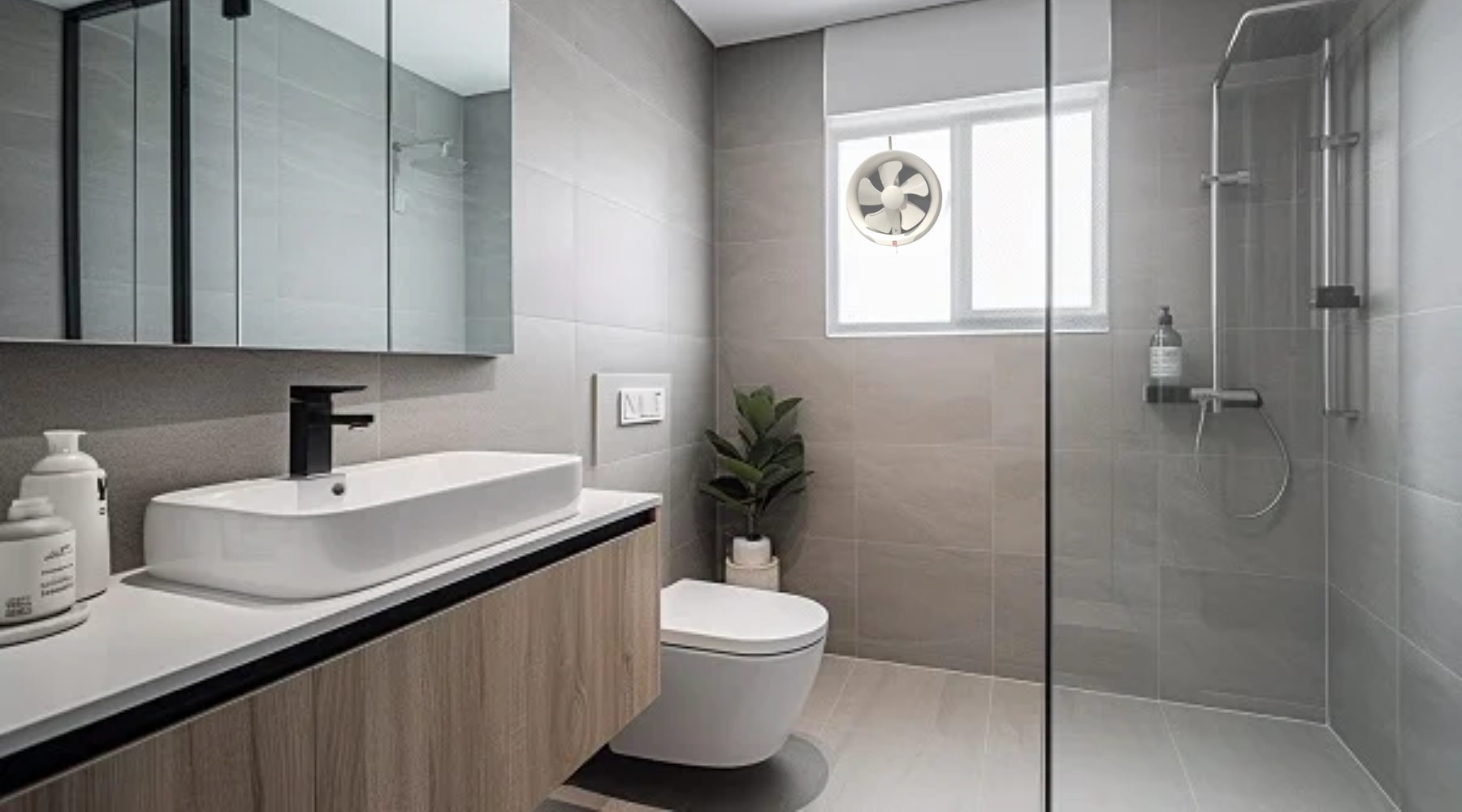
HDB Bathrooms: WUD for Standard, WHPCT for Enclosed Master Baths
Most HDB bathrooms with a direct or short duct path to the external wall are well served by the WUD series.
For master bathrooms that sit deeper in the unit, further from the external wall with longer duct routing the WHPCT's higher static pressure maintains adequate airflow where a standard fan would struggle.
If your master bathroom has no window and relies entirely on mechanical ventilation, err toward WHPCT.
HDB and Condo Kitchens: WHPCT Is the Default Choice
Kitchen ventilation faces the highest load: grease-laden air, sustained heat, and in Singapore homes, frequent high-heat wok cooking.
The WHPCT series handles this combination more reliably over time.
Note that kitchen exhaust fans vent cooking odours and light grease, they do not replace a range hood for heavy cooking.
Both serve different functions and are typically installed together.
Condo Bathrooms and Powder Rooms: ALH Where Walls Are Unavailable
In condos with full-height carpentry, stone feature walls, or wet rooms where all surfaces are tiled with no practical core-drill point, the ALH ceiling series is often the only viable solution.
Confirm ceiling void depth with your ID early, insufficient void space is the most common reason ALH installations require redesign mid-reno.
Utility Rooms and Store Rooms: WUD Is Sufficient
Lower moisture and odour loads in utility and store rooms mean the WUD series is more than adequate.
Focus instead on ensuring the fan is actually switched on regularly utility room fans are the most frequently neglected in Singapore homes.
Common Mistakes When Choosing an Exhaust Fan Series
Mistake 1: Choosing based on physical size alone.
A larger grille does not mean higher airflow.
Airflow capacity (measured in m³/hr or CMH) and static pressure rating are the relevant specs, not the face plate dimensions.
Mistake 2: Installing a standard fan in a kitchen.
Kitchen air carries grease particles that coat fan blades and motors faster than bathroom humidity.
A WUD-grade motor in a kitchen will require more frequent servicing and may fail earlier under sustained load.
Mistake 3: Not confirming ceiling void depth before specifying ALH.
The ALH series requires adequate ceiling void space for the fan body and duct elbow. In HDB flats with false ceilings, this is usually sufficient but always measure before ordering.
FAQ
Q: Which KDK series is best for an HDB kitchen in Singapore?
A: WHPCT, kitchen air carries grease and heat that demands higher static pressure performance over sustained daily use.
Q: Can I use the ALH ceiling fan in an HDB flat?
A: Yes, if there's sufficient ceiling void depth, common in HDB units with false ceilings, but always confirm measurements before ordering.
Q: What does CMH mean on a KDK fan spec sheet?
A: Cubic metres per hour, the volume of air the fan moves; higher CMH means greater ventilation capacity for larger or more demanding rooms.
Q: WUD or WHPCT for a windowless HDB master bathroom?
A: WHPCT, a windowless bathroom relies entirely on the fan, and higher static pressure ensures adequate airflow even through longer or less-than-ideal duct routing.
Q: Do I need a licensed electrician to install any of these KDK series?
A: Yes for new wiring or duct core-drilling; like-for-like replacements on existing points may be simpler, but always verify scope with a licensed electrician first.

Written by Goldberg Home SG